
Waste Management in the Middle East and North Africa
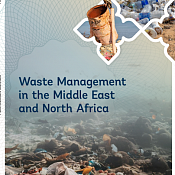
Title:
Waste Management in the Middle East and North Africa
Tags
Environment, Climate, Agriculture and Forestry, Economic Development/ Key National Indicators (KNIs)
Summary
The World Bank (WB) released a new working paper on waste management governance in the Middle East and North Africa (MENA) region. The report warns of an escalating sectoral crisis driven by rapid population growth and urbanisation, changing consumption patterns, and the lack of adequate infrastructure and governance institutions. According to the World Bank, countries in the region generate more than 155 million tonnes of waste annually. If current trends continue, this figure is expected to double by 2050, reaching 294 million tonnes. At present, the environmental damage caused by inefficient waste management is estimated at USD 7.2 billion per year. The analysis also indicates that up to 83% of collected waste could be recycled and reused. A significant share of current economic losses is linked not to resource scarcity, but to ineffective sector organisation and regulation. The World Bank calls for technological modernisation of waste management systems and the consistent implementation of circular economy principles.
Type of organization
International organization (IO)
Organization name
The World Bank (WB)
Type of publication
Report
Language
English
Publication date
22 January 2026